
Sensitivity:
Obedience:
Trainability:
Stubbornness:
Attention Span:
Obedience training your Toy Poodle is essential for creating respect and harmony in your home. It helps define roles and responsibilities, making life easier for both you and your dog. Training also fosters leadership, trust, and discipline, strengthening your bond.
Toy Poodles are lively, affectionate, and intelligent, which makes them highly trainable. Their eagerness to please enhances the training experience. This step-by-step guide will walk you through the obedience training process, tailored to Toy Poodles.
Step 1: Choose a Training Method
Understanding the Toy Poodle’s temperament is important when selecting a training method. They are sensitive and highly intelligent, which makes positive reinforcement particularly effective. Their lively nature may require patience and consistency.
Selecting the right equipment is important for a Toy Poodle, given their extra-small size and sensitive nature. A well-fitted harness, a lightweight leash, and a clicker can help with effective training sessions.
Consistency in your chosen method and equipment is key. Toy Poodles thrive on routine and predictability, which helps reduce any potential stubbornness during training.
Step 2: Establish a Routine
Setting realistic goals is important for your Poodle’s learning pace. Start with simple commands like “sit” and “stay,” then gradually introduce more complex ones. Their high intelligence and eagerness to please facilitate quicker learning.
Choose a quiet, distraction-free location to conduct training sessions. An environment with minimal disturbances will help your Poodle focus better on the tasks at hand.
Establish a daily schedule with 2 to 3 sessions a day, each lasting 10 to 15 minutes. Consistency in timing, both on weekdays and weekends, is key to establishing a routine that your Poodle can rely on.
Sample Toy Poodle basic obedience commands training schedule:
- Morning: Practice the “sit” command 5 times
- Afternoon: Go over the “come” command 5 times
- Evening: Teach the “stay” command 5 times
Sample Toy Poodle advanced obedience commands training schedule:
- Morning: Practice the “off” command 5 times
- Afternoon: Teach the “heel” command 5 times
- Evening: Go over the “no” and “leave it” commands 3 times each
Step 3: Assert Leadership
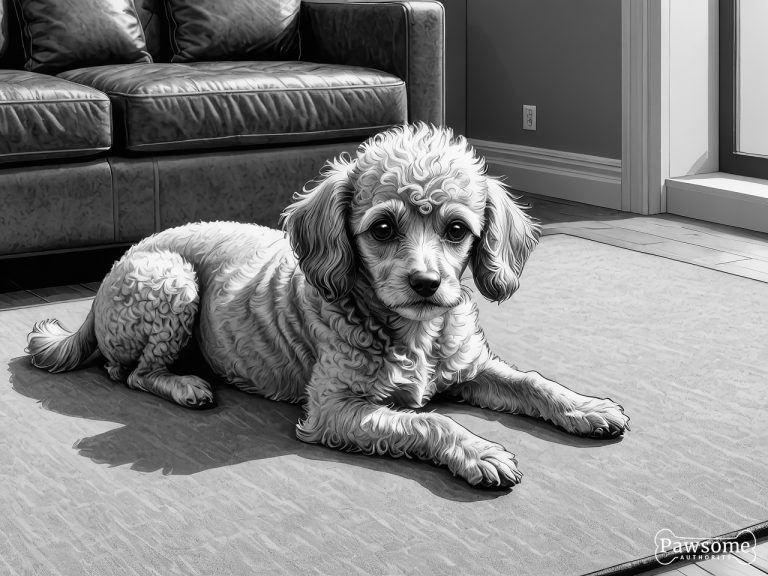
Establishing leadership is important for obedience training. With a firm yet fair approach, you can assert the role of a pack leader, which Toy Poodles respect and respond to positively.
Setting boundaries is essential to define acceptable and unacceptable behaviors. By establishing clear rules and boundaries, you provide structure that your Poodle will thrive within.
Rewarding obedience with immediate positive reinforcement encourages your Poodle to repeat desired behaviors. Their eagerness to please makes this approach effective.
Step 4: Teach Basic Commands
Teaching your Poodle basic commands like “sit,” “stay,” and “come” is important. These commands form the foundation of obedience training and should be rewarded immediately to reinforce learning.
To teach “sit,” hold a treat above your Poodle’s head. As they look up, their bottom will naturally lower to the ground. Reward promptly when they sit.
For “stay,” start with your Poodle in a “sit” position. Use a hand signal and say “stay.” Gradually increase the distance before rewarding them for staying.
The “come” command involves having your Poodle “sit” and “stay” first. Then, call them to “come” while using an encouraging tone. Reward as soon as they reach you.
Toy Poodle basic obedience commands cheat sheet:
- Sit: Hold a treat above the head, say “sit,” reward sitting
- Stay: From the “sit” position, command “stay,” step back, reward staying
- Come: In the “sit” and “stay” positions, say “come,” reward arrival
Step 5: Expand Commands

Teaching advanced commands like “down,” “off,” “heel,” “no,” and “leave it” enhances your Poodle’s obedience and strengthens your bond.
To teach “down,” lure your Poodle into a lying position by lowering a treat to the ground. Reward when they follow the treat down.
The “off” command involves guiding your Poodle away from something. Use a firm voice and provide a reward when they comply.
For “heel,” walk with your Poodle at your side. Keep them from moving ahead or lagging with gentle guidance and rewards.
The “no” command should be used sparingly. Use a firm voice to show when a behavior is undesirable.
“Leave it” teaches your Poodle not to touch certain objects. Start with a treat in your hand, cover it, and reward them for ignoring it.
Toy Poodle advanced obedience commands cheat sheet:
- Down: Lower a treat to the ground while instructing “down,” reward lying
- Off: Direct away from an undesired area while saying “off,” reward compliance
- Heel: Say “heel” when walking with a short leash, reward walking beside
- No: Discourage unwanted behavior while commanding “no,” reward obedience
- Leave It: Guide away from an object or item while instructing “leave it,” reward restraint
Step 6: Advance to Complex Commands
Teaching complex commands like “fetch, bring back” and “heel, sit, wait” enhances obedience and provides mental stimulation for your Poodle.
Teaching “fetch, bring back” involves using a toy. Command “fetch,” then encourage your Poodle to return with the toy, rewarding them upon return.
For “heel, sit, wait,” walk your Poodle beside you. Command “sit” and “wait” at intervals, rewarding for patience and obedience.
Toy Poodle complex obedience commands cheat sheet:
- Fetch, Bring Back: Throw a toy, command “fetch, bring back,” reward retrieval
- Heel, Sit, Wait: Instruct “heel” when walking, then “sit” and “wait,” reward patience
Step 7: Maintain Obedience Training
Continuing regular training is essential to instill obedience. Scheduled training keeps your Poodle’s skills sharp and reinforces good behavior consistently.
Increasing challenges gradually by varying difficulty and types of tasks keeps your Poodle engaged. Set realistic expectations to match their capabilities.
Keeping training sessions engaging by introducing different environments and combining playtime with training keeps your Poodle motivated and excited to learn.
Mistakes to Avoid
Using negative reinforcement can undermine your Poodle’s sensitive nature, leading to fear or anxiety. Focus on positive reinforcement to encourage desired behaviors.
Holding long training sessions can lead to fatigue and decreased attention span. Keep sessions short and focused to maintain your Poodle’s interest and enthusiasm.
Being inconsistent with training can confuse your Poodle, making it difficult for them to grasp commands. Consistency in commands and routines is key to effective training.
Changing commands or rules often can bewilder your Poodle. Stick to established commands to provide clarity and ensure your Poodle understands what is expected.
Delaying rewards can confuse your Poodle, making it harder for them to connect the reward with the behavior. Provide immediate rewards to reinforce desired behaviors.
Frequently Asked Questions
How Long Does It Take to Obedience Train a Toy Poodle?
Obedience training for Toy Poodles typically takes 2 to 4 months, though it can vary. Start training between 8 to 12 weeks old. Some Toy Poodles may take longer, but patience and consistency are important.
Why Might My Toy Poodle Be Slow to Obedience Train?
Individual temperament and negative experiences can influence training speed. A lack of motivation or inconsistent training may also contribute. Ensure rewards and engagement are part of the process.
What Are the Most Important Commands to Teach a Toy Poodle?
Teaching “sit,” “stay,” “come,” and “leave it” is essential for Toy Poodles. These commands establish control and ensure safety in various situations. Refer to the “Basic” and “Advanced” obedience commands cheat sheets for guidance.
What Should I Do if My Toy Poodle Refuses to Obey Commands?
Revisit your Poodle’s training schedule, ensuring consistency in goals and location. Simplify commands if they seem overwhelmed and reduce distractions to enhance focus.


