

Sensitivity:
Obedience:
Trainability:
Stubbornness:
Attention Span:
Obedience training your Pembroke Welsh Corgi not only fosters respect and harmony but also clarifies roles and responsibilities for both owner and dog. Obedience training strengthens leadership, builds trust, and instills discipline, creating a strong bond between you and your Pembroke.
This breed’s intelligence, eagerness to please, and loyalty make them ideal candidates for training. This guide provides a step-by-step approach tailored to the Pembroke’s characteristics, ensuring a successful obedience training experience.
Step 1: Choose a Training Method
Pembrokes are known for their intelligence and loyalty. Understanding their temperament will help in choosing the right training method. Intelligent and eager to please, they respond well to positive reinforcement.
Equipping yourself with the right tools is important. For the Pembroke, a comfortable harness, a sturdy leash, and a clicker can enhance training results. These items cater to their small size and playful nature.
Consistency is key to training your Pembroke. Regular use of the chosen method and equipment reinforces learning. Ensure that routines and commands are maintained to harness their strong attention span and trainability.
Step 2: Establish a Routine
Setting realistic goals is essential. Start with simple commands like “sit” and “stay,” then gradually introduce complex ones as your Pembroke learns. Their intelligence and attention span make them quick learners.
Choose a quiet, distraction-free location for training sessions. Pembrokes are alert and can easily get distracted, so a calm environment helps them focus better.
Establish a daily schedule with 2 to 3 training sessions, each lasting 10 to 15 minutes. Consistent timing on weekdays and weekends will accommodate the Pembroke’s energy and eagerness to please.
Sample Pembroke Welsh Corgi basic obedience commands training schedule:
- Morning: Go over the “come” command 5 times
- Afternoon: Practice the “stay” command 5 times
- Evening: Teach the “sit” command 5 times
Sample Pembroke Welsh Corgi advanced obedience commands training schedule:
- Morning: Teach the “down” command 5 times
- Afternoon: Go over the “off” command 5 times
- Evening: Practice the “heel” and “no” commands 3 times each
Step 3: Assert Leadership
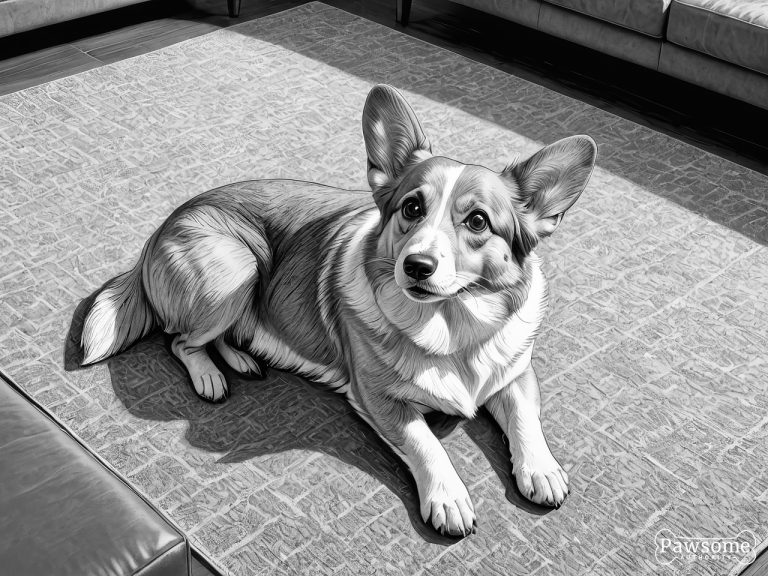
Establishing leadership is important for your Pembroke. Be firm and fair to position yourself as the pack leader. Their bold nature responds well to clear guidance and structure.
Setting boundaries is necessary. Define acceptable and unacceptable behaviors to your Pembroke. This helps them understand rules, making them feel secure and guided.
Rewarding obedience is important. Use positive reinforcement right after they follow commands. This approach leverages their eagerness to please and strengthens your bond.
Step 4: Teach Basic Commands
Teaching your Pembroke basic commands like “sit,” “stay,” and “come” is essential for their obedience. Reward them immediately to reinforce learning.
For “sit,” hold a treat above their head. As they look up, their bottom will naturally lower. Praise and reward them instantly.
Teaching “stay” requires them to “sit” first. Gradually increase your distance while they stay in place. Reward their patience and focus.
For “come,” start with your Pembroke in a “sit” and “stay” position. Call them to come to you, using a happy tone to encourage them.
Pembroke Welsh Corgi basic obedience commands cheat sheet:
- Sit: Hold a treat above the head, instruct “sit,” reward sitting
- Stay: From the “sit” position, command “stay,” increase distance, reward staying
- Come: In the “sit” and “stay” positions, instruct “come,” reward arrival
Step 5: Expand Commands

Teaching your Pembroke advanced commands like “down,” “off,” “heel,” “no,” and “leave it” enhances their obedience. Use positive reinforcement for successful execution.
For “down,” guide your Pembroke into a lying position by lowering a treat to the ground. Reward them as soon as they comply.
Teaching “off” involves instructing your Pembroke to get off or away from objects. Use a firm voice to communicate this command.
Commanding “heel” ensures your Pembroke walks beside you. Practice walking without them pulling ahead or lagging.
Use “no” sparingly, using a firm voice. This helps your Pembroke understand unacceptable behaviors without confusion.
“Leave it” teaches your Pembroke not to touch certain objects. Use treats to distract them, rewarding compliance.
Pembroke Welsh Corgi advanced obedience commands cheat sheet:
- Down: Lower a treat to the ground while saying “down,” reward lying
- Off: Direct away from an undesired area while instructing “off,” reward compliance
- Heel: Say “heel” when walking with a short leash, reward walking beside
- No: Discourage unwanted behavior while commanding “no,” reward obedience
- Leave It: Guide away from an object or item while instructing “leave it,” reward restraint
Step 6: Advance to Complex Commands
Advancing to complex commands like “fetch, bring back” and “heel, sit, wait” enhances your Pembroke’s obedience and provides mental stimulation.
Teaching “fetch, bring back” involves using a toy. Encourage your Pembroke to fetch and return it, rewarding successful attempts.
For “heel, sit, wait,” practice walking with your Pembroke beside you. Command them to sit and wait, reinforcing patience.
Pembroke Welsh Corgi complex obedience commands cheat sheet:
- Fetch, Bring Back: Throw a toy, say “fetch, bring back,” reward retrieval
- Heel, Sit, Wait: Command “heel” when walking, then “sit” and “wait,” reward patience
Step 7: Maintain Obedience Training
Continuing regular training sessions is essential for maintaining your Pembroke’s obedience. Consistency makes sure learned behaviors are reinforced.
Increasing challenges in training keeps your Pembroke engaged. Introduce new tasks and environments to match their intelligence and energy.
Keep training sessions engaging by varying environments and incorporating playtime. Immediate rewards enhance their eagerness to take part.
Mistakes to Avoid
Using negative reinforcement can hinder your Pembroke’s progress. Focus on positive methods to encourage learning.
Holding long training sessions can lead to fatigue and loss of interest. Keep sessions short and focused.
Being inconsistent with training can create confusion for your Pembroke. Stick to established routines and commands.
Changing commands or rules can confuse your Pembroke. Consistency is key to maintaining and reinforcing their understanding and obedience.
Delaying rewards after commands can reduce their effect. Reward your Pembroke immediately to reinforce the desired behavior.
Frequently Asked Questions
How Long Does It Take to Obedience Train a Pembroke Welsh Corgi?
Training a Pembroke can take 2 to 4 months, depending on command complexity. Start between 8 to 12 weeks old. Some Pembrokes may take longer, so patience and consistency are key.
Why Might My Pembroke Welsh Corgi Be Slow to Obedience Train?
A Pembroke’s individual temperament can affect training speed. Negative experiences or inadequate training can slow progress. Ensure motivation through rewards and engagement, and avoid inconsistent training.
What Are the Most Important Commands to Teach a Pembroke Welsh Corgi?
Teaching “sit,” “stay,” “come,” and “leave it” establishes control and ensures safety. Refer to the “Basic” and “Advanced” obedience commands cheat sheets for guidance.
What Should I Do if My Pembroke Welsh Corgi Refuses to Obey Commands?
Revisit your training schedule for consistency. Assess command complexity to avoid overwhelming your Pembroke. Reduce distractions and use rewards effectively to encourage compliance.


