
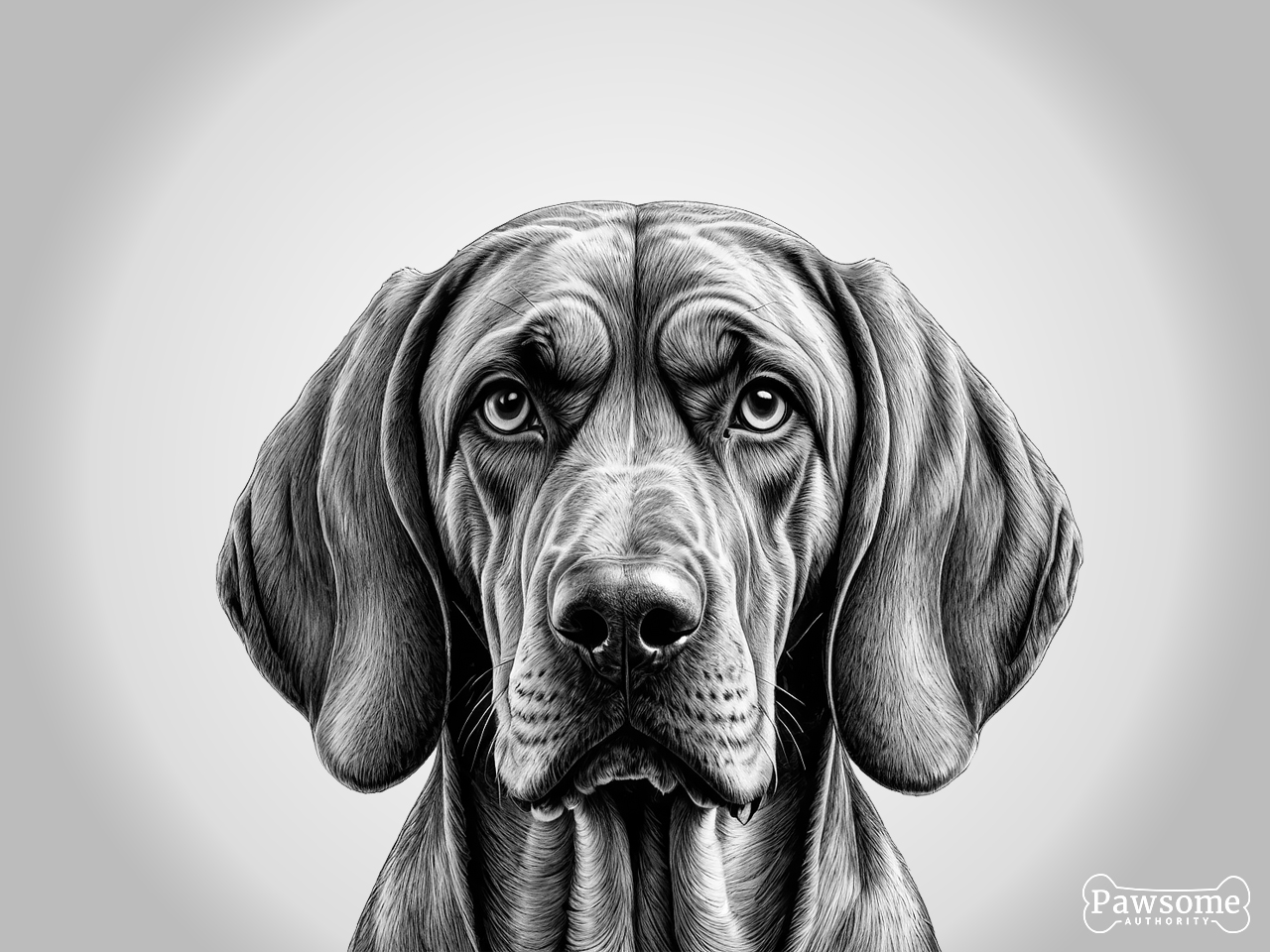
The Bloodhound, known for its incredible tracking abilities, has a large and heavy build. They stand between 23 and 27 inches (58.5 to 68.5 cm) tall and weigh 80 to 110 pounds (36.5 to 50 kg). These dogs typically live for 10 to 12 years and may face certain health conditions.
Gentle and affectionate by nature, Bloodhounds are great with children and other pets. They show moderate energy and intelligence, requiring regular mental stimulation. Ideal for moderately active owners in suburban or rural areas, Bloodhounds thrive in homes with spacious yards.
Origin & History
Breed:
Pronunciation:
Other Name(s):
Origin:
Group:
Suggested Names (Male):
Suggested Names (Female):
The Bloodhound originated in Belgium during the Middle Ages. It is known for its unmatched tracking abilities and gentle temperament. The name “Bloodhound” likely refers to its pure bloodline and noble ancestry. This breed’s history is rich and deeply intertwined with hunting and tracking purposes.
Developed from the St. Hubert Hound and various French hounds, Bloodhounds were first bred for tracking and hunting large game like deer and bears. These dogs were highly valued for their keen sense of smell and determination on the trail.
Throughout history, Bloodhounds have played a significant role because of their tracking skills. With industrialization, their popularity fluctuated. However, their value in search and rescue has maintained their presence. Today, Bloodhounds are used in police work, search and rescue missions, and as loyal companions.
The Bloodhound’s evolution highlights its transition from a hunting dog to a versatile working breed used in law enforcement and companionship. Their gentle and patient temperament makes them suitable for many roles.
The Bloodhound gained recognition from the American Kennel Club (AKC) in 1885, the United Kennel Club (UKC) in 1914, and the Fédération Cynologique Internationale (FCI) in 1960. These recognitions underscore the breed’s storied history and lasting appeal.
Appearance & Characteristics
Size:
Height (Male):
Height (Female):
Weight (Male):
Weight (Female):
Coat Length:
Coat Type:
Double Coat:
Hypoallergenic:
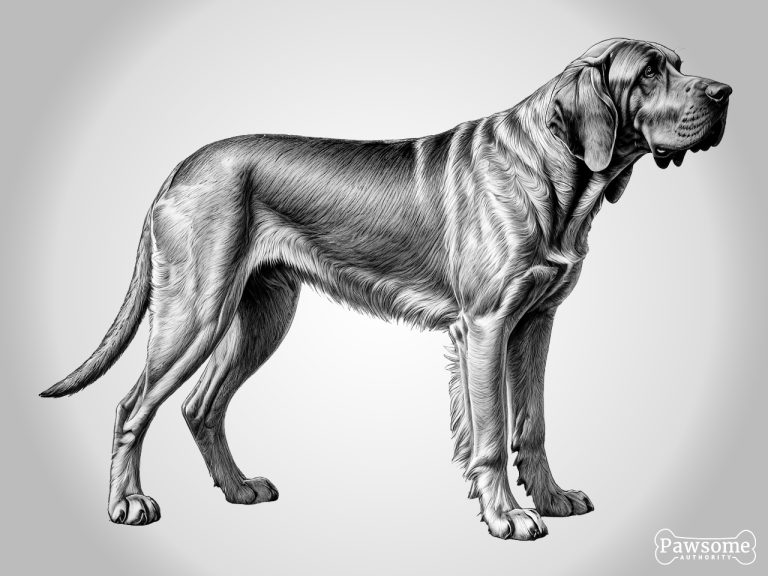
Bloodhounds are large, heavy dogs with a muscular build. Males stand 25 to 27 inches (63.5 to 68.5 cm) tall, while females reach 23 to 25 inches (58.5 to 63.5 cm). Males weigh between 90 and 110 pounds (41 to 50 kg), and females weigh 80 to 100 pounds (36.5 to 45.5 kg).
Their short, smooth coat comes in colors like black and tan, liver and tan, and solid red. Some Bloodhounds have white markings on the chest or feet. While they are not hypoallergenic, their coat requires minimal grooming.
Bloodhounds have a wrinkled and expressive face with a domed, narrow head. Their long, deep muzzle and black or liver nose are distinctive features. They have dark brown eyes and long, floppy ears, which add to their unique appearance.
The breed’s long, muscular neck and well-laid-back shoulders support a broad, deep chest and strong back. Bloodhounds have a level topline and a saber-like tail that adds to their striking silhouette.
Temperament & Behavior
Affection:
Playfulness:
Protectiveness:
Territoriality:
Prey Drive:
Barking:
With Children:
With Adults:
With Dogs:
With Pets:
With Strangers:
Bloodhounds are gentle and affectionate companions. They show a balanced level of playfulness and protectiveness, making them ideal family pets. While not overly territorial, they bark occasionally, reflecting their inquisitive nature.
Known for their intelligence, Bloodhounds can be stubborn and sensitive. Their trainability and obedience levels require experienced owners who can provide firm yet gentle guidance. They are best suited for those with dog training experience.
Bloodhounds are wonderful with children and pets, showing a low prey drive. They get along well with adults and are friendly with strangers. Proper socialization ensures they remain well-mannered with all family members.
Training & Exercise

Energy:
Intelligence:
Mental Stimulation:
Obedience:
Trainability:
Bloodhounds require both physical and mental stimulation to stay content. Their moderate energy levels call for 60 to 90 minutes of moderate intensity activity daily. Without proper engagement, they may become bored and act out.
Sample Bloodhound daily activity schedule:
- Morning: 30-minute leisurely walk
- Afternoon: 20-minute scent work session
- Evening: 20-minute exploratory walk
Bloodhound socialization, Bloodhound potty training, Bloodhound obedience training, and Bloodhound behavior training are essential parts of raising a well-rounded Bloodhound. These elements ensure they grow into well-behaved and adaptable companions.
Grooming & Maintenance
Shedding:
Grooming:
Drooling:
Bloodhounds shed moderately throughout the year and require consistent brushing to help maintain coat health. General care for Bloodhounds includes brushing, bathing, nail clipping, ear cleaning, teeth cleaning, face wiping, and mouth wiping.
Typical Bloodhound grooming and care schedule:
- Brushing: Every 4 to 5 days with a bristle brush or rubber brush
- Bathing: Every 8 to 10 weeks with dog-friendly shampoo
- Nail Clipping: Every 3 to 4 weeks using plier or guillotine-style clippers
- Ear cleaning: Weekly or twice weekly with cotton balls or gauze and a dog-friendly ear cleaner
- Teeth Cleaning: 3 to 4 times a week with a dog-specific toothbrush
- Face Wiping: As needed to clean skin folds
- Mouth Wiping: As needed to manage drooling
Health & Lifespan
Lifespan:
Health Issues:
Dental Issues:
Ear Issues:
Eye Issues:
Bloodhounds have a life expectancy of 10 to 12 years. They are predisposed to health issues like Hip Dysplasia, Elbow Dysplasia, Gastric Dilatation-Volvulus, Skin Fold Dermatitis, and Ectropion.
Other health conditions Bloodhounds are susceptible to include:
Dental issues can arise because of their long, droopy lips that trap food and bacteria, making regular teeth brushing necessary. Ear problems are common because of their long floppy ears, which trap moisture and debris. Skin folds can contribute to skin conditions, and eye issues, like ectropion, entropion, and cherry eye, require attention.
Routine veterinary care is essential for Bloodhounds. Regular check-ups, preventive care, and early intervention are important to maintaining their health. Tailored care plans can address specific health concerns.
Breed Suitability

Experience Level:
First-Time Owner:
Apartment Living:
Bloodhounds are perfect for moderately active families who enjoy outdoor activities. Their intelligence, energy, and grooming needs require dedicated owners with firm leadership skills. They thrive in suburban or rural settings with ample space.
Because of their stubbornness, Bloodhounds are best for experienced dog owners. Their eagerness to please and moderate trainability make them rewarding pets for those with experience. First-time owners may find them challenging.
This breed is affectionate and playful, making them excellent family companions. They are gentle with children and get along well with other pets. Their low protectiveness and territoriality make them reliable family dogs.
Bloodhounds are large dogs best suited for homes with spacious yards. They prefer moderate climates and may struggle in apartments because of their size and barking tendencies. They require daily activity to stay healthy and happy.
Frequently Asked Questions
Are Bloodhounds Good with Children?
Yes, Bloodhounds are good with children. Their gentle and affectionate nature makes them excellent companions for kids. They enjoy playtime and show a balanced level of protectiveness, making them reliable family pets.
Are Bloodhounds Good with Other Pets?
Yes, Bloodhounds get along well with other pets. Their low territoriality lets them coexist peacefully with other animals. Early Bloodhound socialization is important to ensure they remain friendly and well-behaved.
Are Bloodhounds Good for First-Time Dog Owners?
No, Bloodhounds may not be ideal for first-time dog owners. Their stubbornness and moderate trainability require experienced handlers. Consistent Bloodhound obedience training is necessary to manage their behavior effectively.
Do Bloodhounds Shed a Lot?
Bloodhounds shed moderately year-round, with minimal seasonal variation. Regular grooming helps manage their shedding. Brushing every 4 to 5 days is recommended to keep their coat healthy.
Do Bloodhounds Bark a Lot?
No, Bloodhounds do not bark excessively. They have moderate vocal tendencies, which can be managed with Bloodhound behavior training. Their barking is typically related to their inquisitive nature and alertness.
Can Bloodhounds Live In an Apartment?
Bloodhounds are not well-suited for apartment living. Their size and need for daily activity require a home with a spacious yard. They thrive in environments where they can explore and engage their keen sense of smell.
Can Bloodhounds Be Left Alone for Long Periods?
No, Bloodhounds should not be left alone for extended periods. They may experience separation anxiety. Gradual separation, low-key arrivals and departures, or hiring a dog sitter can help ease their anxiety.
Can Bloodhounds Swim?
No, Bloodhounds are not natural swimmers. While they can swim, supervision and safety measures are necessary. Never force them into water, and always ensure their safety during aquatic activities.


